- Classification:
- Developer’s Public Description
- Accessed:
- September 2026
- What the source confirms
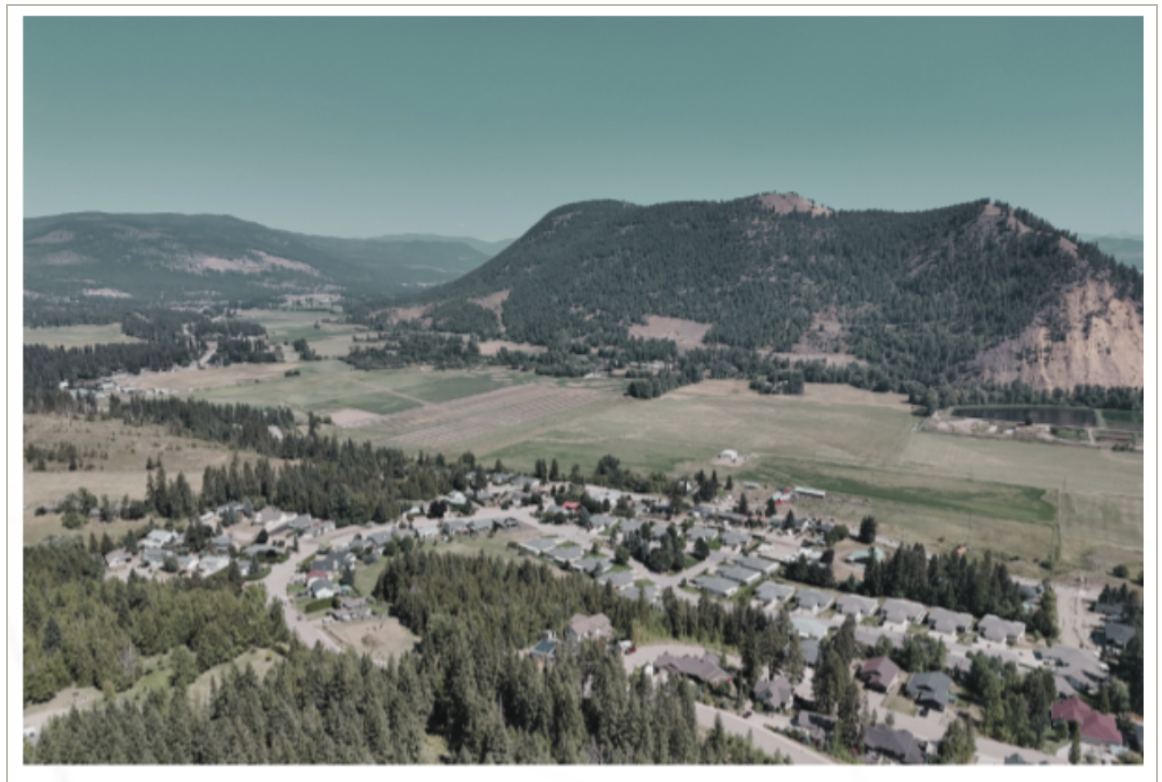
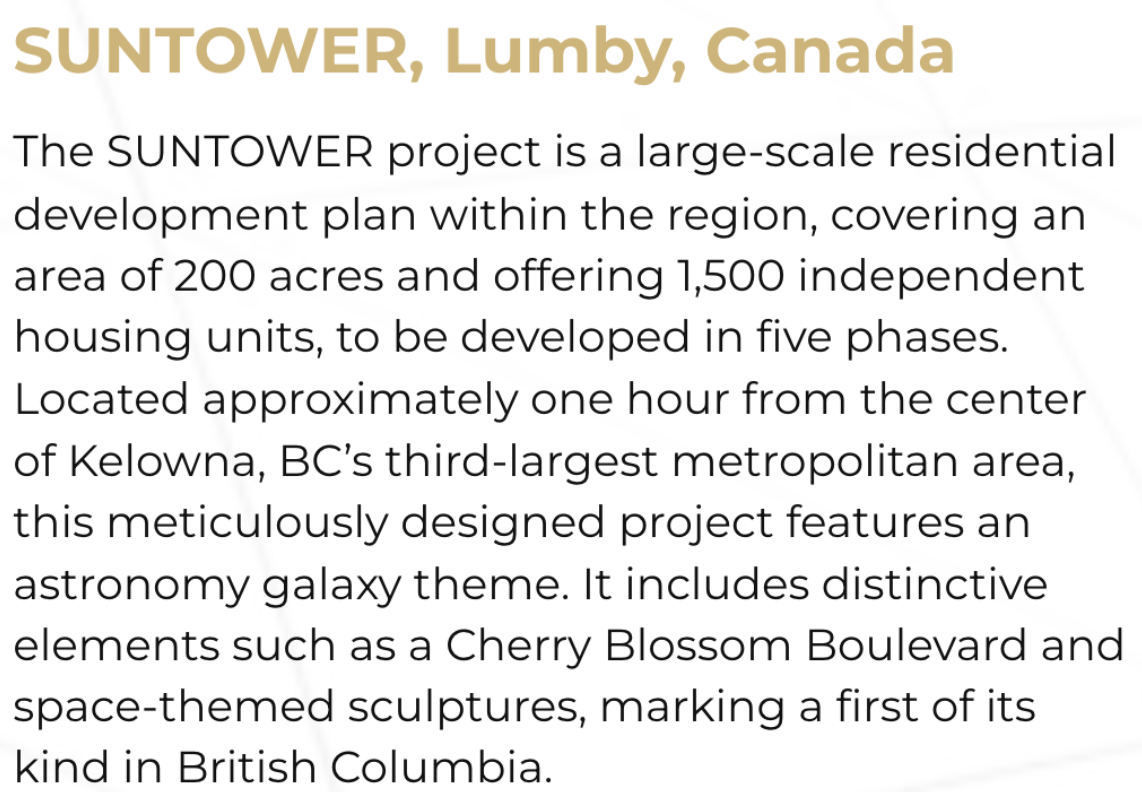
- The developer’s public website markets SUNTOWER Lumby as a proposed 200-acre residential project involving approximately 1,500 housing units across five phases.
- Public Village of Lumby records reviewed for this report document a 31-lot subdivision proposal at 2680 Cedar Ridge Street on approximately 20 acres, including road-variance approvals and related planning, environmental and infrastructure records.
- The available municipal records reviewed do not establish that the complete 200-acre, 1,500-unit concept has received Village approval.
- Relevant context
- The developer’s marketed concept is substantially larger than the 31-lot subdivision documented in the municipal records reviewed.
- Lumby’s housing-needs work identifies a 20-year target of approximately 540 additional homes. A 1,500-unit concept would therefore represent a scale considerably beyond that planning target.
- Village engineering material has also identified existing concerns involving water storage, firefighting flow and other infrastructure capacity. These issues are directly relevant when considering development of this scale.
- Source limitation
- The developer’s public description is promotional material and is not the same as a municipal application, engineering approval, servicing agreement, subdivision approval or construction authorization.
- The public records reviewed do not identify the location or ownership of the complete 200 acres described in the marketing.
- This entry does not claim that Oriental Investments Group owns the Cedar Ridge property. No verified land-title record establishing that fact has been reviewed.
- The February 2026 investors mentioned in Village minutes are not identified in those minutes, and this entry does not suggest they were the same group.
- Bradley’s interpretation or concern
- Bradley believes a proposal of this scale requires clear public answers before residents are asked to accept its implications.
- The central questions are:
- What has actually been submitted?
- What has been approved?
- Where are the complete proposed lands located?
- Can Lumby’s water, sewer, roads, drainage and fire-flow systems support the proposal?
- What improvements would be required?
- Who would pay for those improvements and their ongoing maintenance?
- What commitments would be enforceable if the companies involved changed?
- Bradley’s proposed response
- Bradley supports responsible development that fits Lumby’s capacity and is evaluated transparently.
- Residents should receive plain-language information about the project’s proposed size, land ownership, applications, approvals, infrastructure requirements, public costs and realistic timeline.
- Water storage, fire flow, sewer capacity, roads and other essential infrastructure must be planned and funded before development proceeds at a scale that places additional pressure on existing systems.
- Developer obligations should be written into enforceable servicing agreements and supported by appropriate financial security.
- Growth should pay its own way.